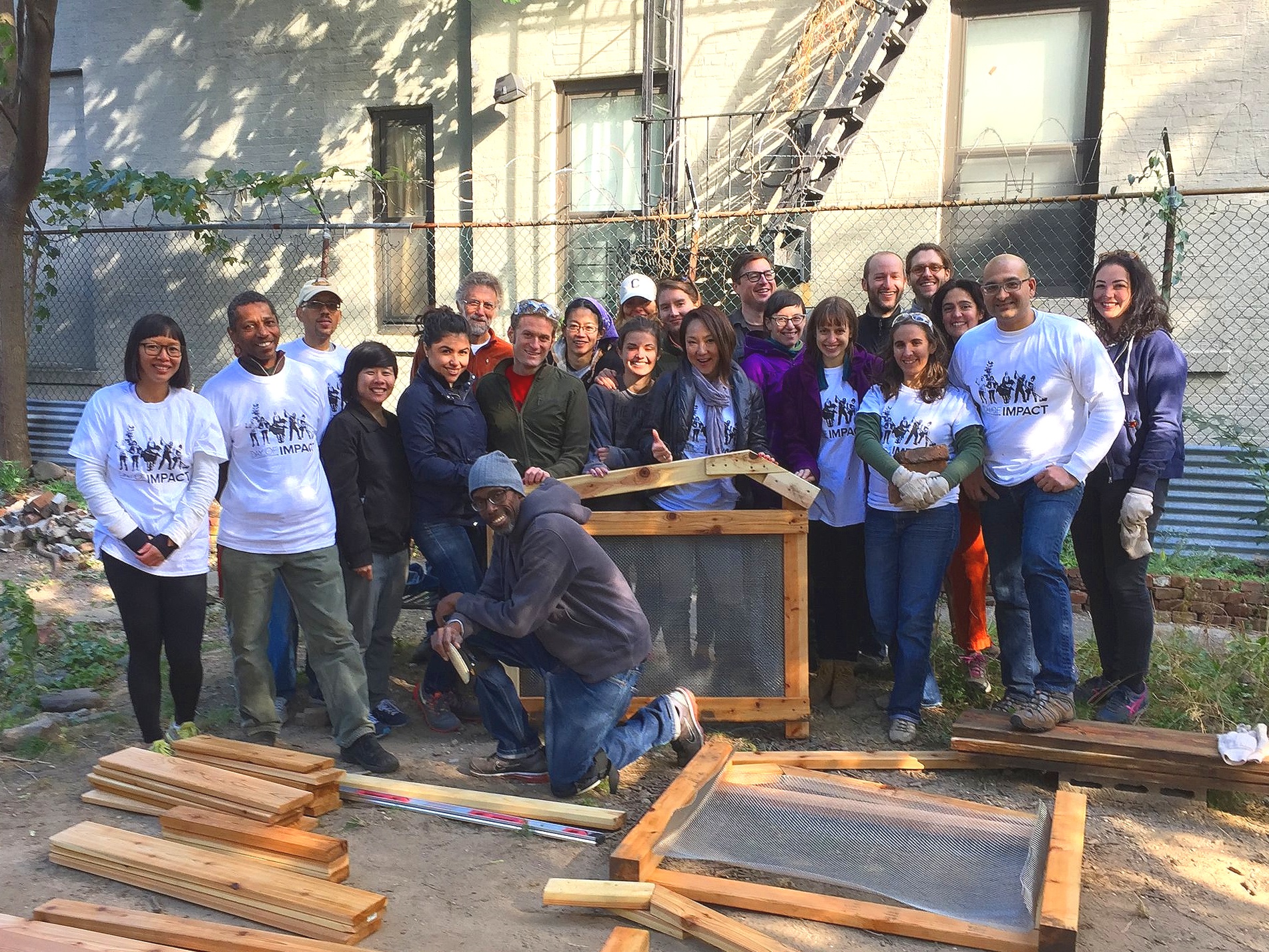
A Day of Impact: Rebuilding Community at Walt L. Shamel Garden
A Day of Impact: Rebuilding Community at Walt L. Shamel Garden
In October 2015, during the energy and optimism of Archtober, members of the Architecture for Humanity New Yorkchapter stepped away from their desks, drawings, and deadlines to take part in something far more immediate—a hands-on day of service in the heart of Brooklyn.
The occasion was AFHny’s annual Day of Impact, a coordinated effort bringing architects, designers, and volunteers together across New York City to support community-based organizations. Among the sites selected that year was the Walt L. Shamel Community Garden in Crown Heights—a neighborhood space rooted in stewardship, resilience, and local pride.
A Living Piece of the Neighborhood
Community gardens like Shamel are more than green spaces. They are shared infrastructure—places where neighbors gather, food is grown, and relationships are built.
In Crown Heights, the garden serves as:
A source of fresh produce
A safe, open space for residents
A platform for education and community programming
By supporting the garden, AFHny volunteers weren’t just maintaining a site—they were reinforcing a social ecosystem.
Throughout the day, conversations flowed easily between volunteers and local stewards. Stories were shared about the garden’s history, its challenges, and its role in the neighborhood. These exchanges underscored something architects often strive for but don’t always experience firsthand: the lived reality of the spaces we help shape.
Designing Beyond Drawings
Architecture is often associated with large-scale projects—towers, public buildings, and urban master plans. But at its core, the discipline is about shaping environments that support people and communities.
At Walt L. Shamel Community Garden, that mission took on a different scale.
Volunteers arrived early, tools in hand, ready to contribute wherever needed. The work was not glamorous: clearing debris, repairing planting beds, repainting worn structures, and organizing materials that had accumulated over seasons of use. Yet each task carried weight. Every repaired bench, every refreshed planter, every cleaned pathway helped restore the garden as a functional and welcoming space.
For many participants, it was a rare opportunity to engage directly with the physical impact of their labor—no intermediaries, no long timelines. Just immediate, tangible results.
Collaboration in Action
The Day of Impact wasn’t limited to a single site. Across the city, teams were simultaneously working with organizations ranging from environmental groups to youth programs, all aligned around a common goal—giving back through design and service.
At Shamel, collaboration took many forms:
Architects working alongside community members
Designers adapting quickly to on-site needs
Volunteers sharing tools, skills, and ideas
There were no titles, no hierarchies—just a shared commitment to improving a place that mattered.
Why It Matters
Events like the Day of Impact remind us that architecture doesn’t only happen in studios or construction sites. It happens wherever people engage with space thoughtfully and intentionally.
For the volunteers, the experience offered:
A reconnection to the purpose behind their profession
A reminder of the human scale of design
A sense of immediate contribution
For the community, it reinforced something equally important: that design professionals are not distant figures, but active participants in the life of the city and our community.