• Work
  • Blog
  • About
Menu

Sandeep Sarda

  • Work
  • Blog
  • About
Stantec Design Competition Entry - Into The Fold

Stantec Design Competition Entry - Into The Fold

CoreNet NYC - Design Competition "Into The Fold"

March 20, 2017

Into the Fold: Making connection through origami

April 20, 2017

On a crisp spring evening in 2017, New York’s corporate real estate and design community gathered aboard the Intrepid Sea, Air & Space Museum for the annual CoreNet Global NYC Chapter Dinner—one of the year’s most anticipated industry events.

Set against the dramatic backdrop of an aircraft carrier on the Hudson, the evening blended networking, celebration, and design recognition. For our team, it was also an opportunity to showcase a competition entry we were especially proud of: “Into The Fold.”

The Setting: Design Meets Spectacle

Few venues in New York match the presence of the Intrepid.

Walking onto the flight deck—surrounded by aircraft, city skyline views, and layered event lighting—the tone was immediately set:

  • Industrial, historic infrastructure

  • Elevated by contemporary staging and production

  • A perfect metaphor for the intersection of legacy and innovation in design

Inside, the event unfolded as a mix of exhibition and celebration, with firms displaying competition entries alongside formal dinner programming.

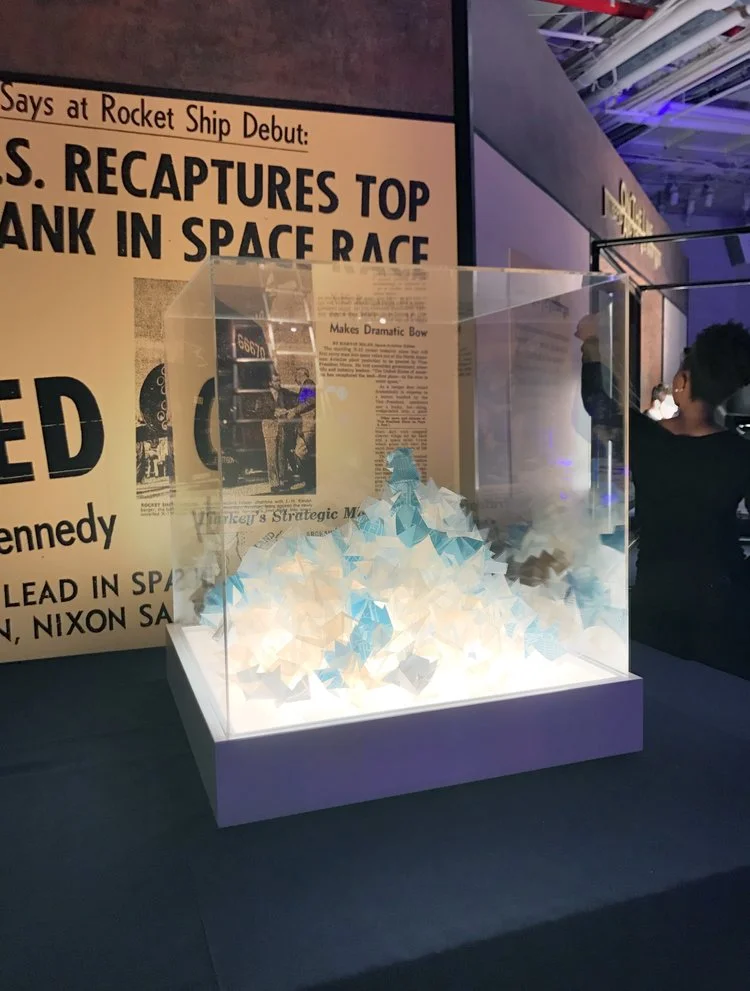
“Into The Fold” — Concept on Display

Our installation, Into The Fold, explored ideas of transformation, continuity, and spatial adaptability.

While each competition entry approached workplace and environmental design differently, our concept centered on:

  • Folding as a spatial strategy — creating dynamic transitions rather than static boundaries

  • Layered surfaces that could define space, movement, and interaction

  • A balance of structure and fluidity, allowing environments to shift with user needs

The physical display translated these ideas into a tangible form—likely through:

  • Folded planes or faceted geometries

  • Material contrast to emphasize depth and movement

  • Lighting to accentuate edges, seams, and transitions

In a room full of boards and models, the goal wasn’t just clarity—it was presence.

The Value of Being in the Room

Events like the CoreNet dinner serve a different purpose than typical project milestones.

it was about:

  • Positioning ideas

  • Engaging peers and industry leaders

  • Testing how concepts resonate outside the studio

Standing alongside other entries, you could read the room in real time:

  • What drew people in

  • What sparked conversation

  • What held attention

That feedback loop—immediate and unfiltered—is rare in traditional practice.

A Night of Alignment

More than anything, the evening reinforced how interconnected the design ecosystem is in New York:

  • Architects

  • Corporate real estate leaders

  • Developers

  • Consultants

All sharing the same space, literally and professionally.

And within that context, Into The Fold wasn’t just a project—it was part of a larger dialogue about how workplaces and environments were evolving.

Looking Back

The 2017 CoreNet NYC Annual Dinner at the Intrepid was equal parts spectacle and substance.

For our team, it marked:

  • A moment of visibility

  • A chance to contribute to a broader design conversation

  • And a reminder that ideas—when presented well—can carry as much impact as built work

Because sometimes, the most important step in a project is putting the idea out into the world—and seeing who stops to look.
In Design Competitions Tags CoreNet NYC
Comment
IMG_3013.jpg

AFHNY - Holiday Party - Gingerbread Architecture Competition (2015)

December 1, 2015

Sweet Structure: AFHNY’s Gingerbread Architecture

As the year wound down and the holiday season set in, the Architecture for Humanity New York chapter gathered for a different kind of design challenge—one that swapped construction documents and CAD files for icing bags, graham crackers, and a healthy dose of creativity.

On December 1st, 2015, AFHNY hosted its annual holiday party, centered around a spirited and slightly chaotic tradition: gingerbread architecture.

Designing with Sugar and Structure

The premise was simple: teams of architects and designers would build architectural models entirely out of gingerbread and candy. The reality? Equal parts design exercise, engineering test, and holiday fun.

This wasn’t just decorating cookies—it was problem-solving in edible form.

Structural stability mattered.
Material limitations were real.
And time constraints were very much in play.

Teams quickly fell into familiar rhythms:

  • Concept sketches (often on napkins)

  • Debates over form vs. feasibility

  • Rapid prototyping (and occasional collapse)

Even in a relaxed setting, the instincts of designers took over.

Recreating an Icon: The Empire State Building

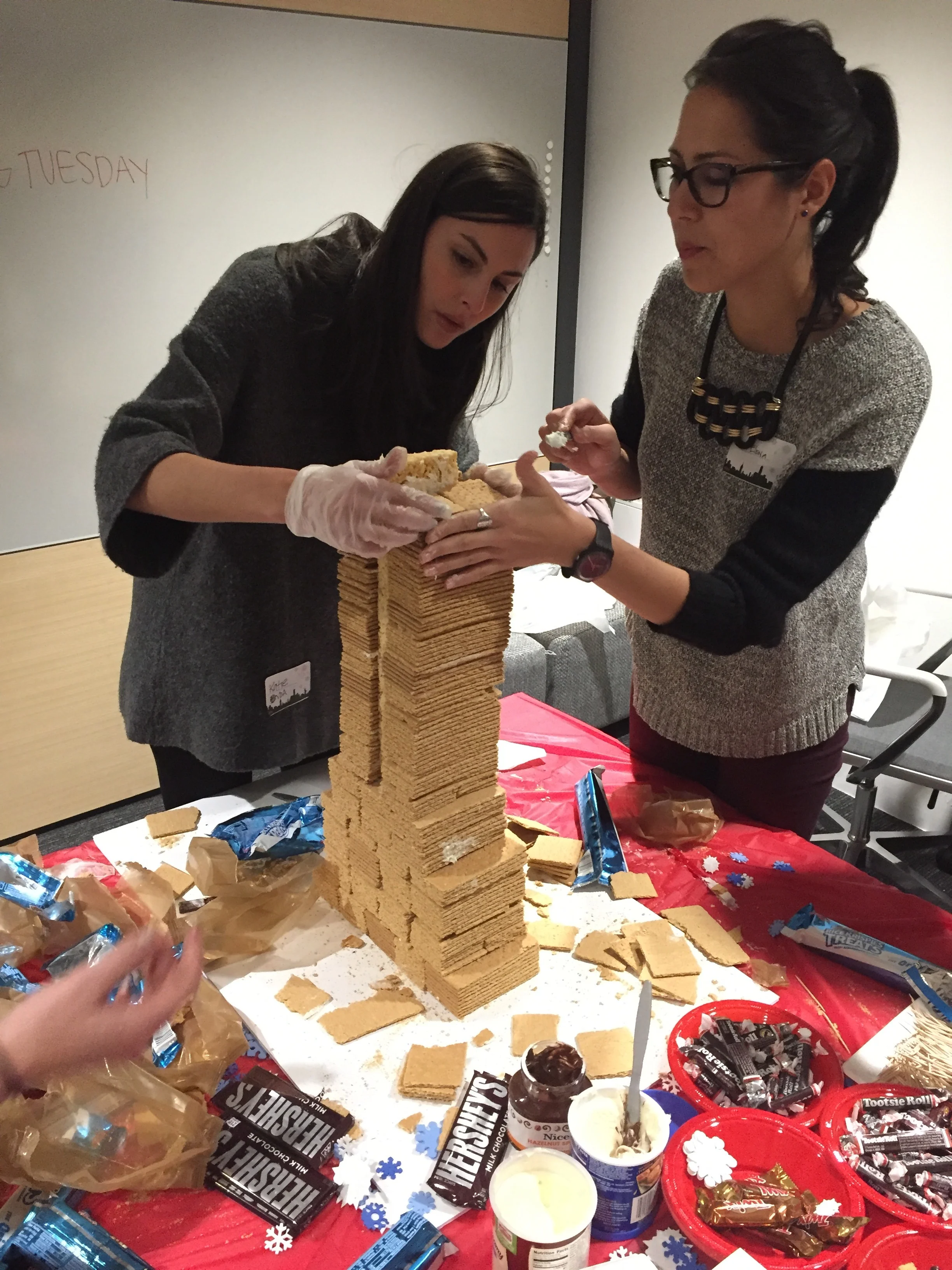
Our team set its sights high—literally—by taking on the Empire State Building.

Translating one of New York City’s most recognizable landmarks into gingerbread required more than just stacking cookies. It meant:

  • Breaking the tower into buildable sections

  • Reinforcing vertical elements with icing “mortar”

  • Carefully aligning proportions to capture the building’s iconic setbacks

What emerged was a surprisingly refined (and slightly leaning) interpretation of the skyscraper—complete with tiered massing and a recognizable silhouette.

It wasn’t perfect. But it was unmistakably the Empire State Building.

Teamwork, Without the Pressure

What made the evening stand out wasn’t just the end result—it was the process.

Unlike traditional projects, there were:

  • No clients

  • No budgets

  • No deadlines beyond the evening

Just teams collaborating, laughing, and occasionally scrambling to keep their structures upright.

It was a reminder that the core of design—working together to create something meaningful (or at least memorable)—doesn’t always require high stakes.

When Architecture Meets Play

Events like this highlight something often overlooked in professional practice: the importance of play.

By stepping outside the constraints of real-world projects, architects reconnect with:

  • Experimentation

  • Creativity without consequence

  • The joy of making

And in this case, a bit of friendly competition didn’t hurt either.

A Different Kind of Impact

While AFHNY’s work is typically grounded in community service and real-world impact, the holiday party offered something equally valuable—community within the profession.

It strengthened connections between members, created new ones, and reminded everyone why they were drawn to design in the first place.

Because sometimes, impact isn’t about what you build for others.

Sometimes, it’s about what you build together—even if it’s made of gingerbread.

1 Comment
IMG_2608.jpg

AFHNY - Day Of Impact - Walt L. Shamel Community Garden

October 17, 2015

A Day of Impact: Rebuilding Community at Walt L. Shamel Garden

A Day of Impact: Rebuilding Community at Walt L. Shamel Garden

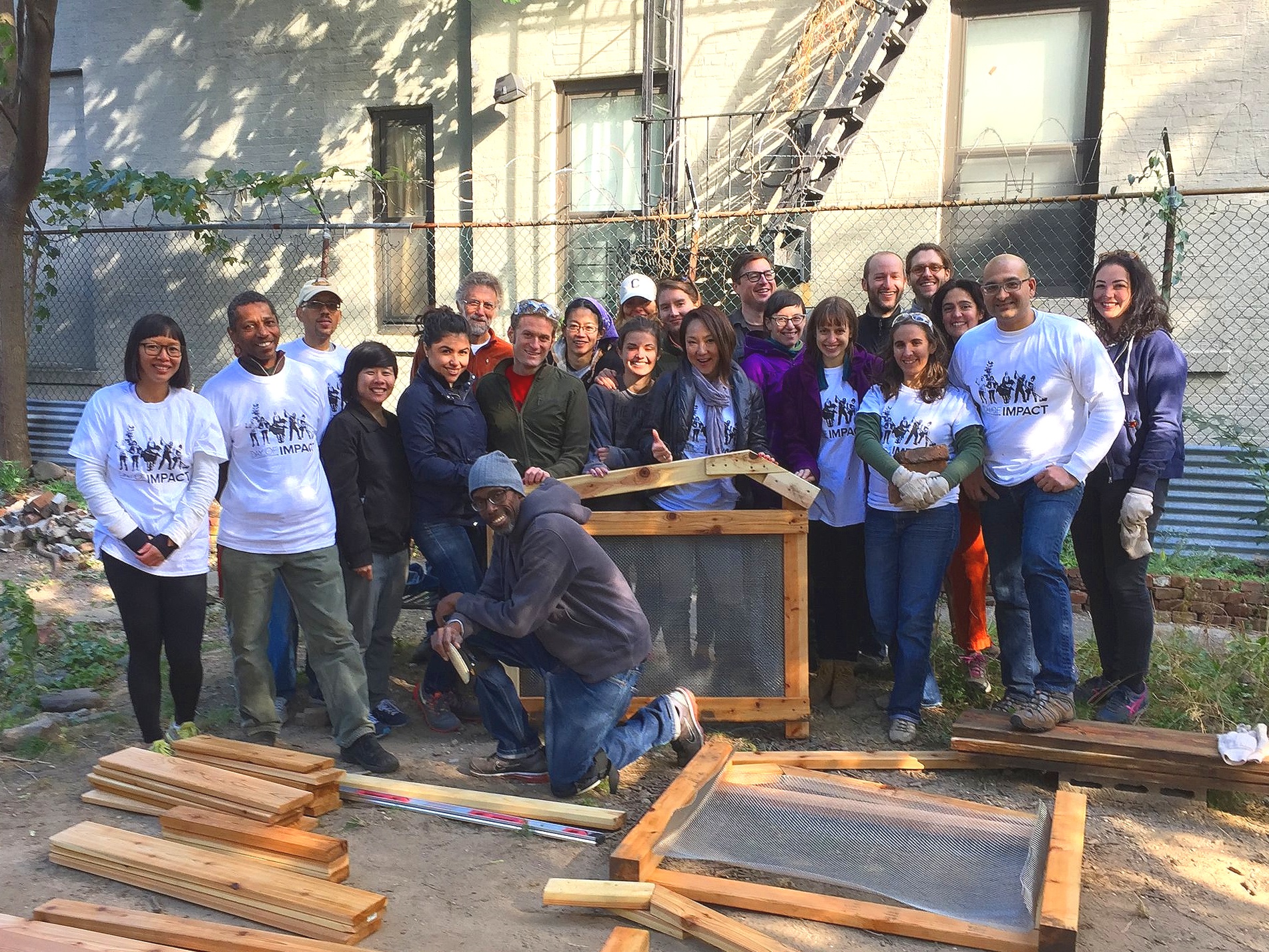
In October 2015, during the energy and optimism of Archtober, members of the Architecture for Humanity New Yorkchapter stepped away from their desks, drawings, and deadlines to take part in something far more immediate—a hands-on day of service in the heart of Brooklyn.

The occasion was AFHny’s annual Day of Impact, a coordinated effort bringing architects, designers, and volunteers together across New York City to support community-based organizations. Among the sites selected that year was the Walt L. Shamel Community Garden in Crown Heights—a neighborhood space rooted in stewardship, resilience, and local pride.

A Living Piece of the Neighborhood

Community gardens like Shamel are more than green spaces. They are shared infrastructure—places where neighbors gather, food is grown, and relationships are built.

In Crown Heights, the garden serves as:

  • A source of fresh produce

  • A safe, open space for residents

  • A platform for education and community programming

By supporting the garden, AFHny volunteers weren’t just maintaining a site—they were reinforcing a social ecosystem.

Throughout the day, conversations flowed easily between volunteers and local stewards. Stories were shared about the garden’s history, its challenges, and its role in the neighborhood. These exchanges underscored something architects often strive for but don’t always experience firsthand: the lived reality of the spaces we help shape.

Designing Beyond Drawings

Architecture is often associated with large-scale projects—towers, public buildings, and urban master plans. But at its core, the discipline is about shaping environments that support people and communities.

At Walt L. Shamel Community Garden, that mission took on a different scale.

Volunteers arrived early, tools in hand, ready to contribute wherever needed. The work was not glamorous: clearing debris, repairing planting beds, repainting worn structures, and organizing materials that had accumulated over seasons of use. Yet each task carried weight. Every repaired bench, every refreshed planter, every cleaned pathway helped restore the garden as a functional and welcoming space.

For many participants, it was a rare opportunity to engage directly with the physical impact of their labor—no intermediaries, no long timelines. Just immediate, tangible results.

Collaboration in Action

The Day of Impact wasn’t limited to a single site. Across the city, teams were simultaneously working with organizations ranging from environmental groups to youth programs, all aligned around a common goal—giving back through design and service.

At Shamel, collaboration took many forms:

  • Architects working alongside community members

  • Designers adapting quickly to on-site needs

  • Volunteers sharing tools, skills, and ideas

There were no titles, no hierarchies—just a shared commitment to improving a place that mattered.

Why It Matters

Events like the Day of Impact remind us that architecture doesn’t only happen in studios or construction sites. It happens wherever people engage with space thoughtfully and intentionally.

For the volunteers, the experience offered:

  • A reconnection to the purpose behind their profession

  • A reminder of the human scale of design

  • A sense of immediate contribution

For the community, it reinforced something equally important: that design professionals are not distant figures, but active participants in the life of the city and our community.

2 Comments

Latest Posts

Featured
Mar 20, 2017
CoreNet NYC - Design Competition "Into The Fold"
Mar 20, 2017
Mar 20, 2017
Dec 1, 2015
AFHNY - Holiday Party - Gingerbread Architecture Competition (2015)
Dec 1, 2015
Dec 1, 2015
Oct 17, 2015
AFHNY - Day Of Impact - Walt L. Shamel Community Garden
Oct 17, 2015
Oct 17, 2015

Powered by Squarespace