Sweet Structure: AFHNY’s Gingerbread Architecture
As the year wound down and the holiday season set in, the Architecture for Humanity New York chapter gathered for a different kind of design challenge—one that swapped construction documents and CAD files for icing bags, graham crackers, and a healthy dose of creativity.
On December 1st, 2015, AFHNY hosted its annual holiday party, centered around a spirited and slightly chaotic tradition: gingerbread architecture.
Designing with Sugar and Structure
The premise was simple: teams of architects and designers would build architectural models entirely out of gingerbread and candy. The reality? Equal parts design exercise, engineering test, and holiday fun.
This wasn’t just decorating cookies—it was problem-solving in edible form.
Structural stability mattered.
Material limitations were real.
And time constraints were very much in play.
Teams quickly fell into familiar rhythms:
Concept sketches (often on napkins)
Debates over form vs. feasibility
Rapid prototyping (and occasional collapse)
Even in a relaxed setting, the instincts of designers took over.
Recreating an Icon: The Empire State Building
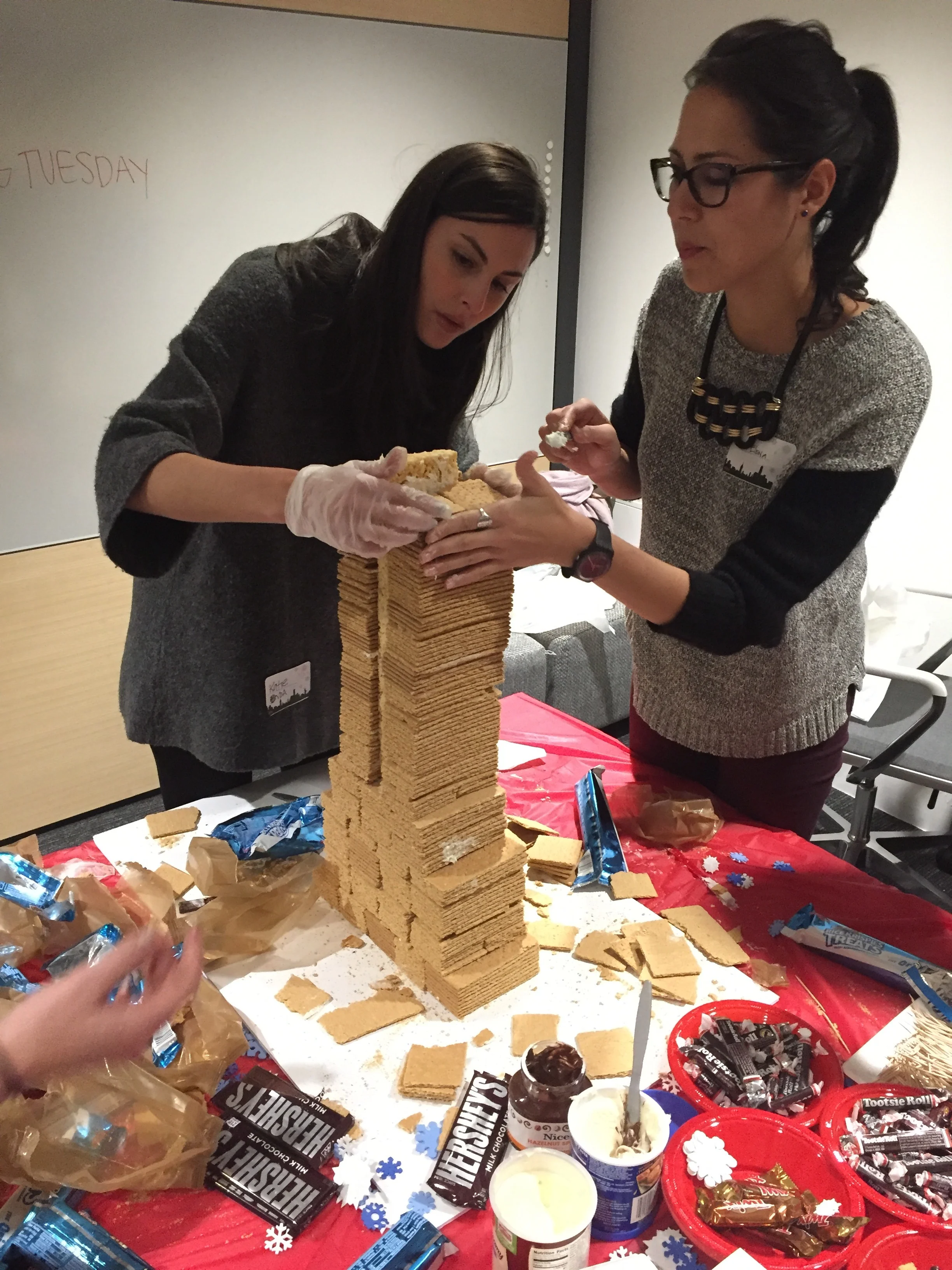
Our team set its sights high—literally—by taking on the Empire State Building.
Translating one of New York City’s most recognizable landmarks into gingerbread required more than just stacking cookies. It meant:
Breaking the tower into buildable sections
Reinforcing vertical elements with icing “mortar”
Carefully aligning proportions to capture the building’s iconic setbacks
What emerged was a surprisingly refined (and slightly leaning) interpretation of the skyscraper—complete with tiered massing and a recognizable silhouette.
It wasn’t perfect. But it was unmistakably the Empire State Building.
Teamwork, Without the Pressure
What made the evening stand out wasn’t just the end result—it was the process.
Unlike traditional projects, there were:
No clients
No budgets
No deadlines beyond the evening
Just teams collaborating, laughing, and occasionally scrambling to keep their structures upright.
It was a reminder that the core of design—working together to create something meaningful (or at least memorable)—doesn’t always require high stakes.
When Architecture Meets Play
Events like this highlight something often overlooked in professional practice: the importance of play.
By stepping outside the constraints of real-world projects, architects reconnect with:
Experimentation
Creativity without consequence
The joy of making
And in this case, a bit of friendly competition didn’t hurt either.
A Different Kind of Impact
While AFHNY’s work is typically grounded in community service and real-world impact, the holiday party offered something equally valuable—community within the profession.
It strengthened connections between members, created new ones, and reminded everyone why they were drawn to design in the first place.
Because sometimes, impact isn’t about what you build for others.
Sometimes, it’s about what you build together—even if it’s made of gingerbread.